




AI Summary
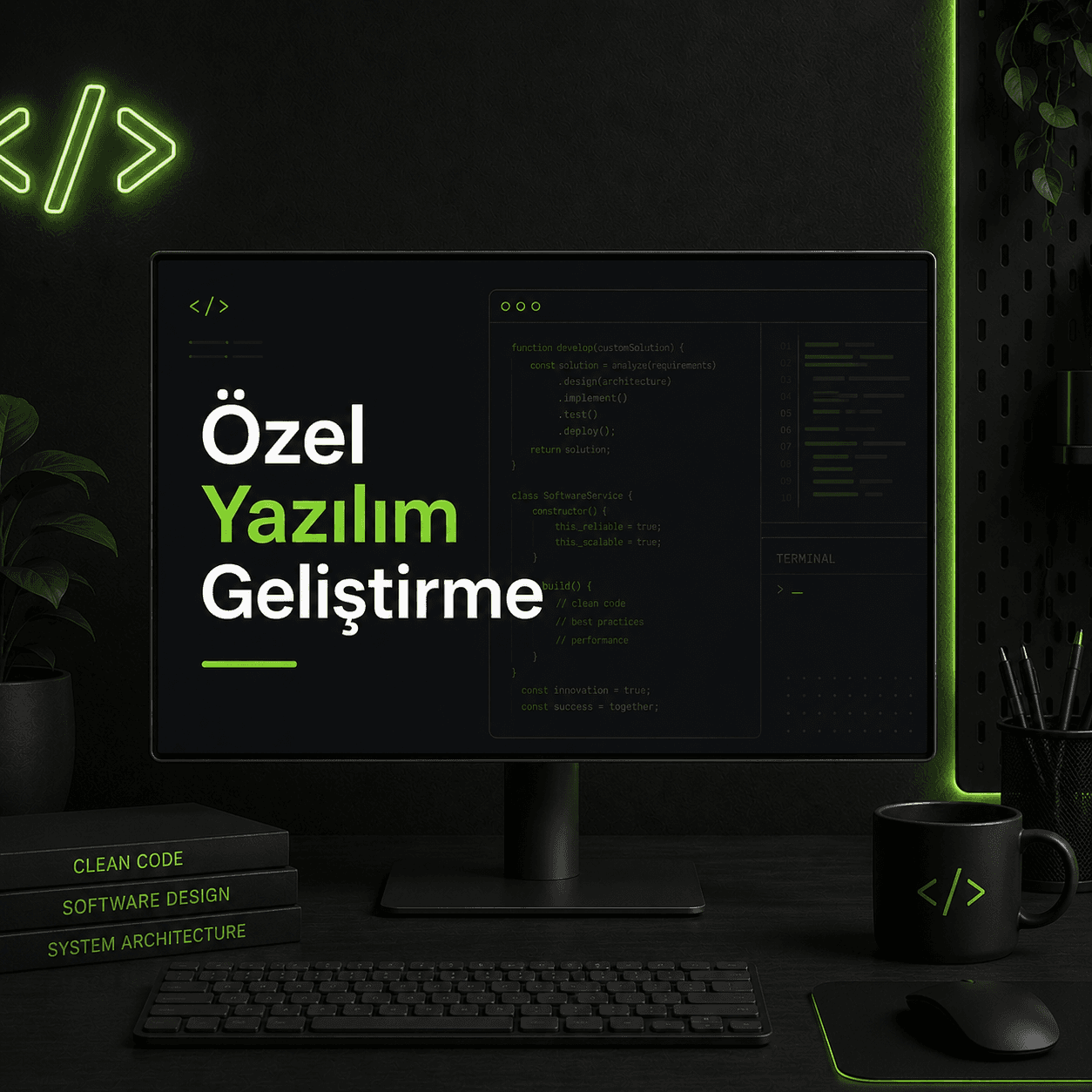
Custom Software Development turns manual and disconnected business processes into web applications, dashboards, automations and integrations designed around your workflow.
Let's Talk!When Off-the-Shelf Software Doesn't Match Your Process
SAP, Logo or generic SaaS tools cover the basics for most companies. They store records, generate routine reports and bring the team into one place. But as your process matures and starts carrying industry-specific rules, multi-step approvals and custom KPIs, the same tool begins to push back. Custom software development steps in here: I build systems shaped around your actual workflow — scalable, maintainable, and owned by you long-term.
What is custom software?
Custom software is built specifically for your company's processes, reporting needs and user roles. Off-the-shelf tools are designed around a general use case; custom software flips that around — the software is shaped to the process, not the other way. The practical difference: you don't spend months in configuration to teach a tool your own approval chain, because the system was planned that way from day one.
The second difference is ownership. With off-the-shelf you pay a per-seat monthly license and the codebase isn't yours. With custom software, the source code belongs to you, your data stays fully under your control, and you don't wait for a vendor roadmap to ship a new feature.
Why custom software development is needed
Three typical situations where off-the-shelf genuinely falls short:
- Industry-specific workflow — Healthcare, legal, logistics or manufacturing rarely fit any generic template. Your approval matrix, document types and KPIs are your own.
- Manual bridges between multiple tools — If the team spends hours each day moving data from Excel to your ERP, integration is missing. Custom software closes those bridges permanently.
- License costs grew while feature usage stays low — As your headcount grows, per-seat licensing balloons. Custom software turns into a one-time investment; adding users has no extra cost.
"Cheaper" is rarely the right reason on its own. The real driver is process-software fit or ownership.
How the custom development process works
- Discovery and process mapping — We walk through your current workflow, the tools you use and where the process breaks. Output: a one-page flow diagram.
- Scope and estimate — Which modules belong to phase one, which to later phases. Estimates are module-based, not hour-based.
- Architecture design — Database schema, API contracts and module boundaries. Monolith vs microservices gets answered here; most SMB projects start with a modular monolith.
- UI prototype — Critical screens are sketched at low fidelity. Discussion happens on paper; code comes after.
- Sprint-based development — Two-week sprints, working modules delivered at the end of each one. Every sprint produces something you can demo.
- Testing and training — Real-scenario testing with your team, bug fixes, onboarding videos.
- Launch and support — Production setup, monitoring tools, intense first-week support, then a monthly maintenance plan.
Which technologies I work with
A modern stack that stays maintainable over years:
- Next.js + React — Admin panel and end-user screens in one codebase. Server components and app router.
- TypeScript — Type safety from database schema to UI component. Most "undefined" runtime errors get caught at compile time.
- PostgreSQL + Prisma or Drizzle — Solid relational base, type-safe ORM, fast developer ergonomics.
- REST API and webhooks — Standard structure for integrations with accounting, payment and email services.
- JWT or OAuth 2.0 — Authentication; multi-factor access optional.
- Docker + CI/CD — Automated tests, lint and deploy on every commit. Manual error surface shrinks.
- Monitoring — Sentry for error capture, simple dashboards for performance visibility — you see what's slowing down in production.
What I build under custom software development
- Workflow software: multi-step approval, state machines, task assignment, reminders
- Admin panels: role-based access, filtering, exports, audit logs
- Customer portals: self-serve account, order tracking, document access
- Reporting and dashboards: custom KPIs, chart components, PDF/Excel export
- Integrations: accounting (Logo, Mikro, e-invoicing), email (Resend, SendGrid), payment (Stripe, iyzico)
- API and webhook layer: two-way data sync with external systems
- Multi-tenant architecture: a single system serving multiple companies in isolation
- Data migration plan: clean, lossless move from a legacy system
Which companies it fits
The investment doesn't produce the same outcome for every company. It pays off when:
- Your process is industry-specific and no off-the-shelf tool fits cleanly.
- Your team still keeps a parallel Excel — a sign that the process hasn't been mapped into the software.
- You use several tools and the team spends hours per day moving data between them.
- You serve customers and need a self-serve portal or branded interface to scale that service.
- Your off-the-shelf license bill has grown while you only use a small slice of the features.
By contrast, standard accounting, email and file storage are usually better served by off-the-shelf tools. Custom software earns its keep on the processes where you actually differentiate.
Decision helper
If you've outgrown your off-the-shelf tool, if your team loses time to manual data shuffling, or if you need a system designed around an industry-specific flow, custom software development is the right move. I always start with a 30–45 minute discovery call to look at your current tools, the real bottleneck and how much of your need is genuinely custom. Some projects don't need a from-scratch build — a small integration on top of your existing stack is enough. The right answer comes out of that conversation.
What's included
- Custom web application and admin panel
- Dashboards, reports, task and tracking screens
- Form, quote, customer, order and file automations
- ERP, CRM, ecommerce, accounting and API integrations
- Roles, permissions, notifications and approval flows
- Mobile-friendly and scalable architecture
- Maintenance and improvement support after launch
Benefits
- Manual work decreases
- Processes become more trackable
- Special business rules can be handled
- Data becomes easier to see
- Systems exchange data more consistently
- The infrastructure can grow with the business