




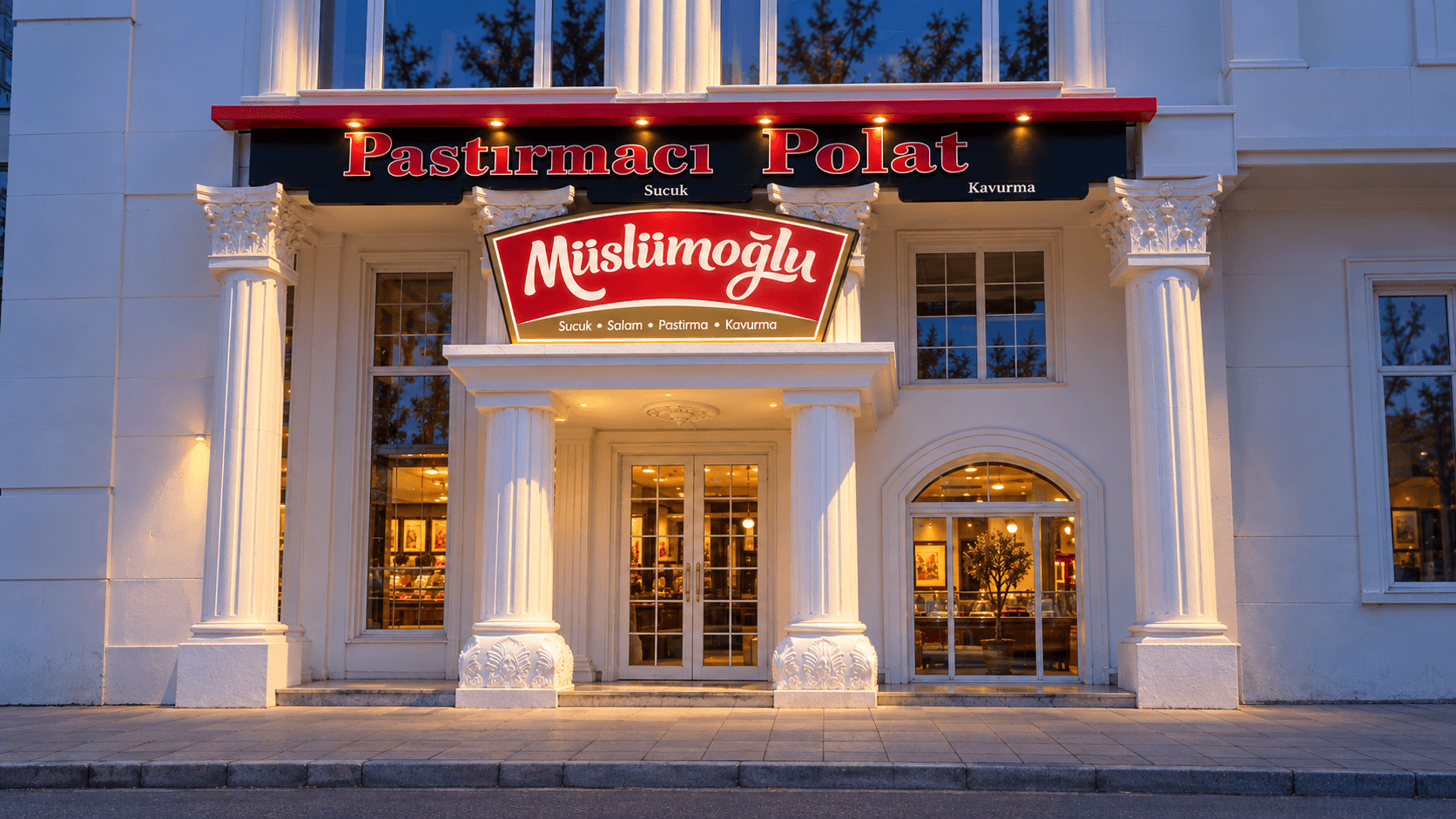
We made the trust of the shop counter the central idea of the digital store.
Pastırmacı Polat is a family business that began as a small pastırma shop in Kayseri in 1974. For that reason, we did not design the store as a simple catalogue of products. We shaped it as a shopping experience that carries the confidence of choosing a product at the counter into the online store. Seeing the product, choosing its weight, selecting the preferred cut, reviewing production documents and understanding how the order will be delivered all became parts of the same journey.
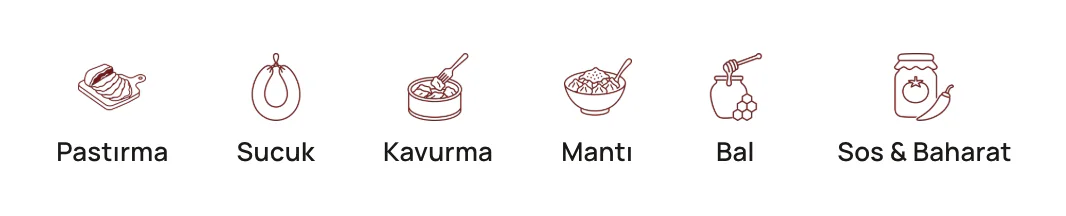
We continued the brand’s existing visual language with white backgrounds, burgundy brand tones, serif headings and warm food photography. In the desktop menu, we separated Pastırma, Sucuk, Kavurma, Mantı, Bal and Sos & Baharat with their own line icons. On mobile, we moved Ana Sayfa, Ürünler, Sepet, Sertifikalar and Hesabım into the bottom navigation bar.
We shaped product selection around the decisions customers make at the counter.
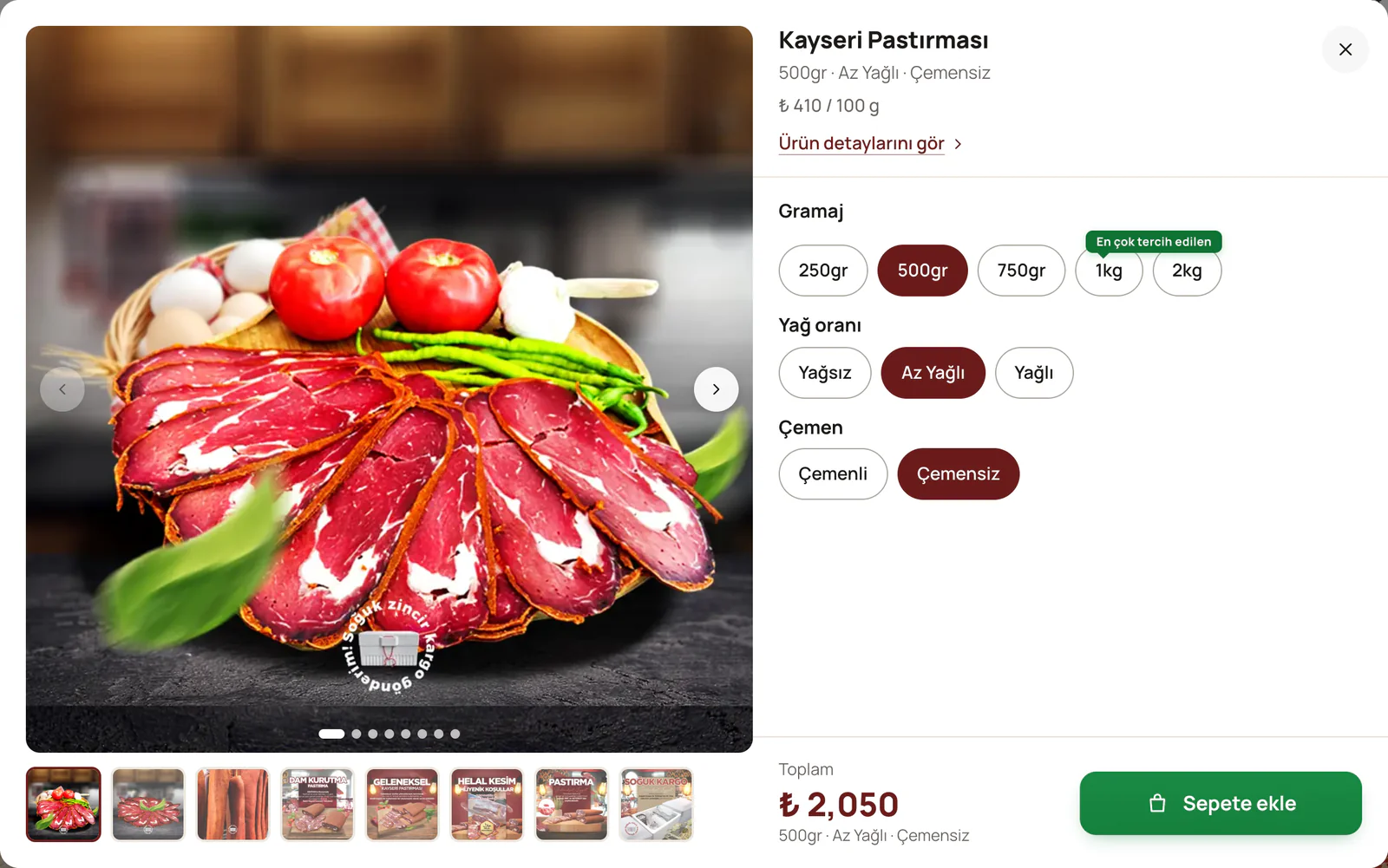
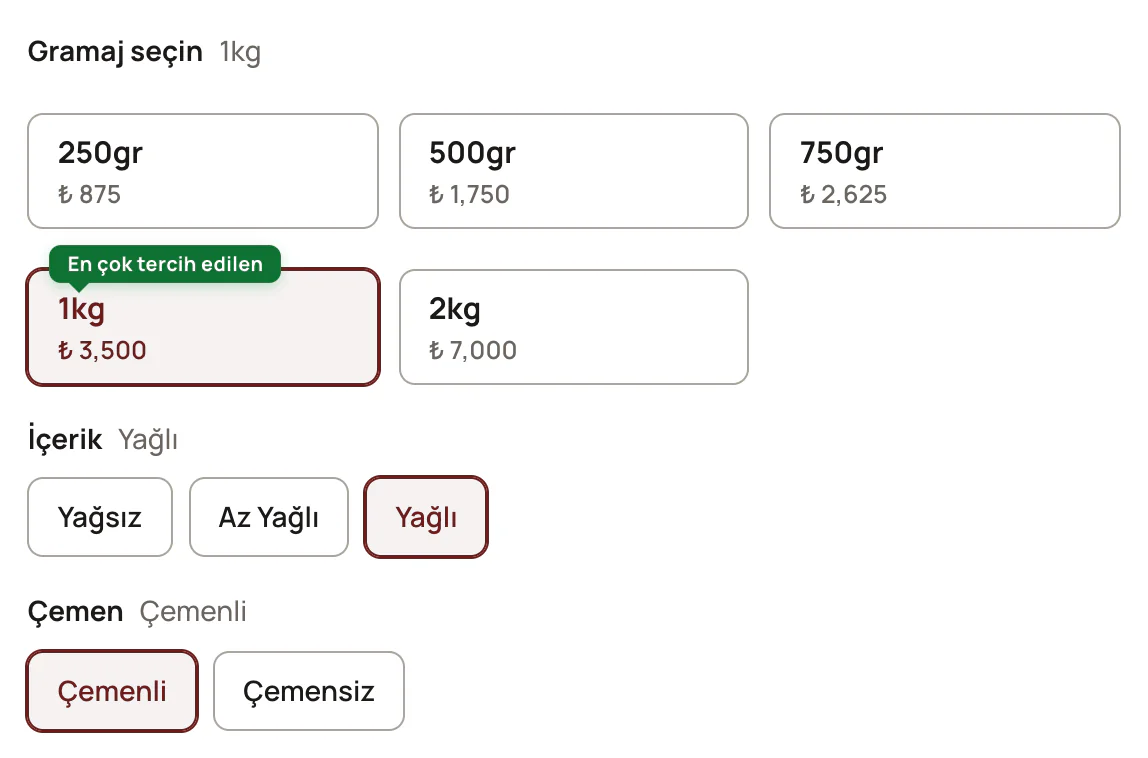
For a product such as pastırma, where both weight and personal preference matter, customers need to see their options clearly. On the Kayseri pastırması product page, we displayed each weight option as a button together with its price. We marked the most preferred weight with a badge. We grouped yağsız, az yağlı and yağlı choices together, while çemenli and çemensiz were presented as a separate selection group.
We followed the same logic in the “Meşhur Kayseri lezzetleri” section on the homepage. Customers can choose a weight, see the price per kilogram and add the product to the cart without opening the product detail page. This lets the comparison between product, quantity and price begin directly on the product card.
We brought the shop counter into the shopping experience through video.
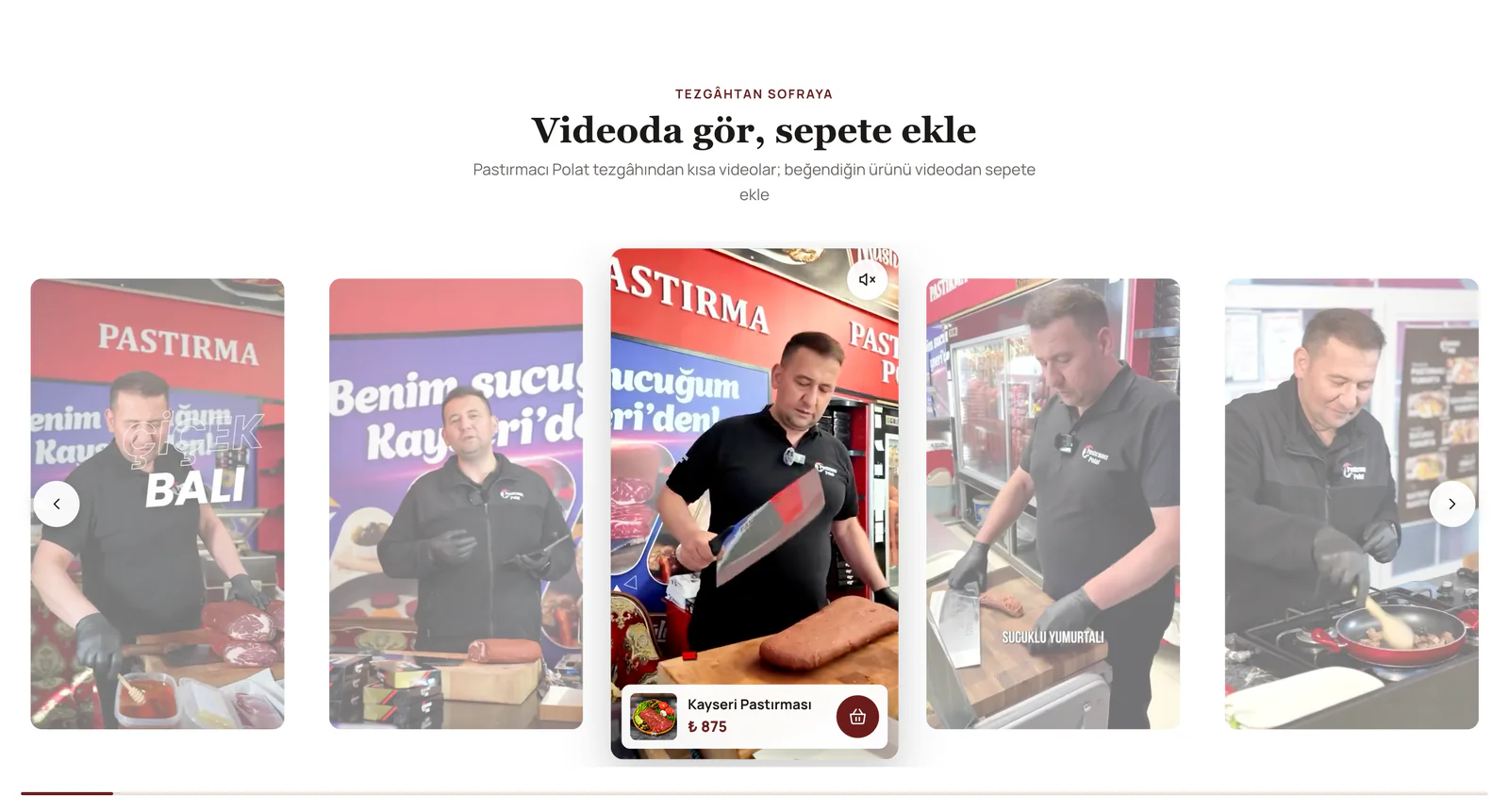
For regional food, we wanted customers to see more than a packaged product photo. In the “Tezgâhtan sofraya” section, we used short videos filmed at the actual shop counter. Each video is connected to its product, allowing customers to add what they are watching directly to the cart.
We also created a dedicated video area on product pages. This means visual storytelling, weight selection, product features, documents and shipping information work as connected parts of the same product story rather than as unrelated pieces of content.
We made the cold chain a visible part of the purchase decision.
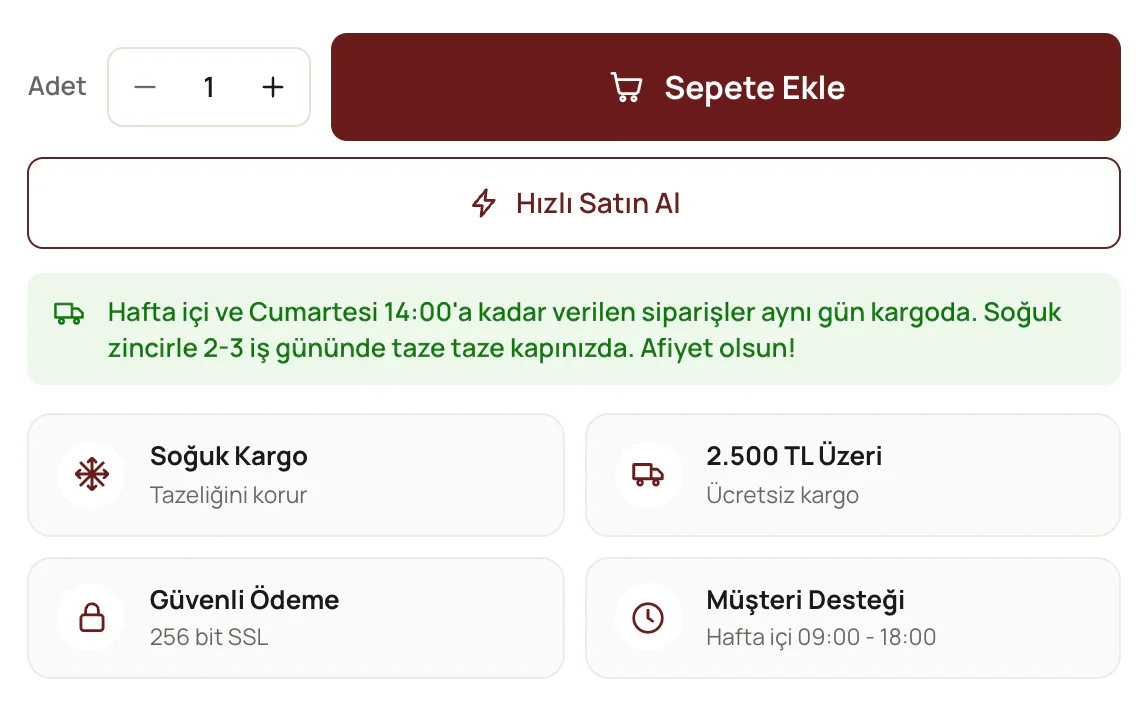
With meat products, customers need to understand not only what they are buying but also how it will reach them. For this reason, we did not leave shipping information only inside a delivery tab. Under the purchase button, we show that orders placed by 14:00 are shipped the same day and delivered within 2-3 business days. Nearby, we grouped cold shipping, the free-shipping threshold, secure payment and customer support details into a trust row.
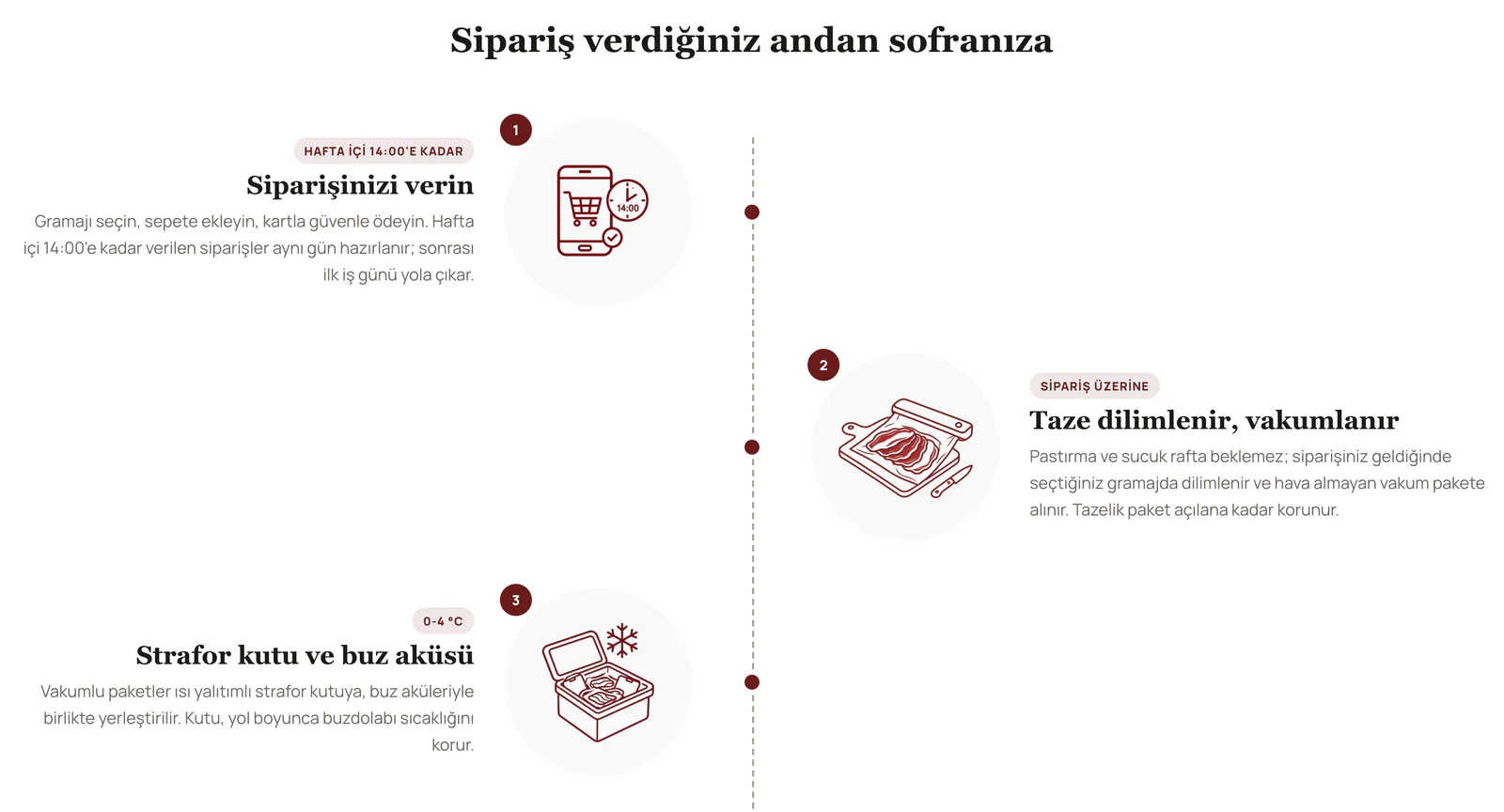
In the “Soğuk kargo” section on the product page, we explain the cold chain, insulated packaging and nationwide delivery together with video. On the separate Soğuk kargo page, we show the process step by step: order placement, fresh slicing and vacuum packing, styrofoam box and ice pack, cold-chain shipping, and placing the product in the refrigerator after delivery. We also highlight 14:00, 0-4 °C and 81 provinces as key details of this process.
We turned certificates into a visible and reviewable layer of trust.
We did not simply mention Pastırmacı Polat’s geographical indication, TSE Halal, Ministry of Agriculture approved facility, ISO 22000 and ISO 9001 certificates in text. In the “Belgeli üretim” section on the homepage, we made the certificates available as documents customers can open and review. Product pages also include a dedicated area for these documents.
We presented key product attributes in short, easy-to-scan cards as well. Information such as 100% beef, additive-free ingredients, traditional drying and cold shipping appears in icon-based cards. This keeps customers from having to search across different pages for product, production and delivery information.
We made each product’s own story manageable within the same structure.
Instead of tying product pages to fixed blocks of text, we structured the content so each field can be managed separately from the panel. Product story, ingredients, frequently asked questions, short description, subtitle, product video and highlights can all be entered individually. The theme then displays each piece of information in its own section on the page.
We use the same core structure for different product groups such as mantı. Weight selection, feature cards, documents, cold-chain information and product-specific questions create a consistent page structure, while the actual content changes according to the product. This keeps the store’s overall language consistent without making every product page feel identical.
We created spaces to answer customer questions before purchase.
On the product page, we included product-specific questions such as whether pastırma can be eaten raw, how it should be stored, whether çemen is eaten, the difference between kuşgömü and sırt, and whether the product can spoil during shipping. On category pages, we placed weight and price filters after a short introduction, then used the rest of the page for broader topics such as what pastırma is, what çemen is, how to store it and how to choose it.
In the “Polat'tan notlar” section, we collected guides about pastırma, mantı, kavurma and sucuk. We connected verified-purchase customer reviews with the relevant products and created a separate page where all reviews can be viewed. A fixed WhatsApp button and the support box on product pages also give customers a direct way to ask questions that remain unanswered.
We kept the customer’s selections clear in the cart as well.
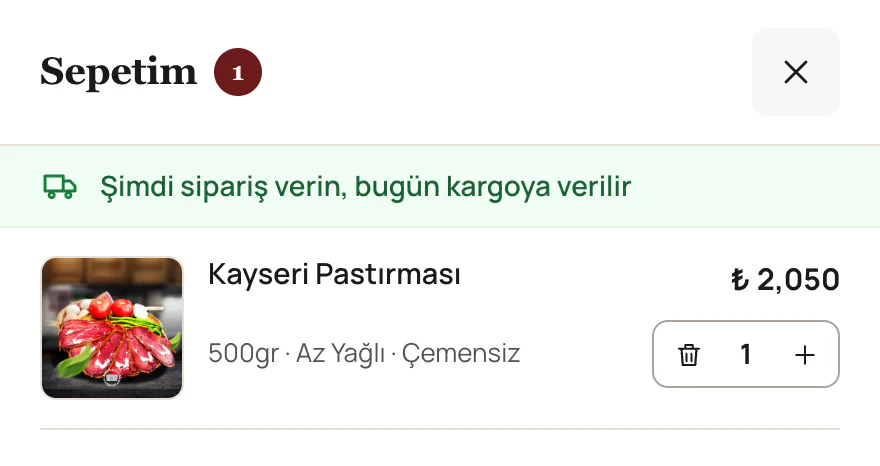
In the cart drawer, we display the selected weight, cut and çemen preferences together with the product. We highlight the remaining amount needed for free cold shipping with a progress message. Sepete Git and Ödemeye Geç are presented separately alongside the order total.
The store we built for Pastırmacı Polat continues the product selection that begins at the counter with clear product details, production documents and cold-chain information throughout the digital shopping journey.